
We hear more and more talk today of environmental justice, social justice and economic justice — not just in sustainability circles, but in the mainstream press and (social) media, plus public discourse.
What seems missing from most of these debates, however, is the notion of bringing all three ideas together into one single, unified concept of sustainability justice, or SUSTICE.
So, why is an integrated approach important?
Protective to restorative, caring to wellbeing
First off, it is not just about creating yet another portmanteau word — some trendy neologism for the sustainability in-crowd to bullet-point in presentations and hashtag in posts.
No, for global business markets, it is all about joined-up thinking and doing.
There is a growing understanding that economic success cannot be considered sustainable unless it simultaneously embraces environmental protection and social care in its objectives and outcomes.
In fact, the language is now changing to accentuate the positive: labelling environmental impacts as ‘restorative’, rather than ‘protective’; and social goods as ‘wellbeing’, instead of ‘caring’.
ESG and DEI; backlash and greenhush
The market is also slowly redefining what it means by value and assets — incorporating new taxonomies for sustainability, pricing health as wealth, plus assigning numbers to natural capital.
Initially, this trend manifested strongly in the rapid proliferation of environmental, social and governance (ESG) investment funds. By the end of 2022, the total for global ESG fund assets had hit the $2.5tr mark, with the 12% increase year-on-year representing almost double the growth seen in the wider market.
More recently, however, especially following the re-election of President Trump, there has been something of a backlash in political, public and corporate discourse. ESG is not the only sustainability concept under fire — other targets include diversity equity and inclusion (DEI), Net Zero, and even renewable energy in general.
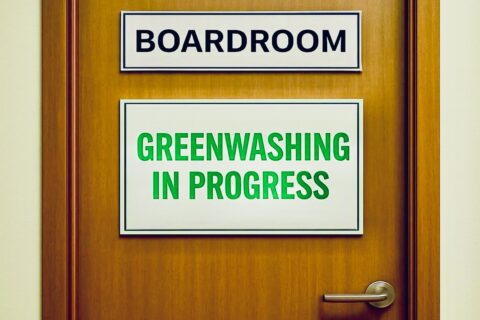
As a consequence, greenhushing is increasingly masking corporate expressions of support for sustainability as a market opportunity. On the flip side, however, one business-critical metric remains all too real: risk.
Risk: environmental, social, economic
Financiers, lenders, investors and insurers all understand risk. In Europe, for instance, 90% of banks currently consider themselves to be materially exposed to climate-related and environmental risks.
Such risks incur big costs, putting a price tag on resilience — and money managers have done the math.
In 2024, there were 27 confirmed weather and climate disaster events with losses exceeding $1bn each in the United States alone. Then in January 2025, the wildfires that raged across Southern California were the costliest such event in US history, running up an eye-watering bill for total economic impact of $112bn.
Such phenomena are not going away — despite the White House preventing the National Centers for Environmental Information (NCEI) from updating its Billion Dollar Weather and Climate Disasters data.
Managing that risk is an ongoing challenge for policymakers and business leaders alike.
Factor in the human impact, though, and the numbers start to get really frightening…
Latest reports reveal that the heat-related mortality rate has shot up 23% since the 1990s, pushing figures for loss of life above the half-million mark today, to an average of 546,000 heat-related deaths per year.
Add in other social impacts of unsustainable policies and practices — such as forced migration, or the cost-of-living crisis — and the risks not only begin to multiply, but have a multiplier effect, too: risk begets risk.
So, why does a SUSTICE strategy make sense; and what are the next steps?
Loss and Damage, remedy and reparation
Fundamentally, it is a matter of mindset shift: Once you start thinking about justice in all its sustainability applications, then start weaving together the threads of enquiry, your strategic journey has begun.
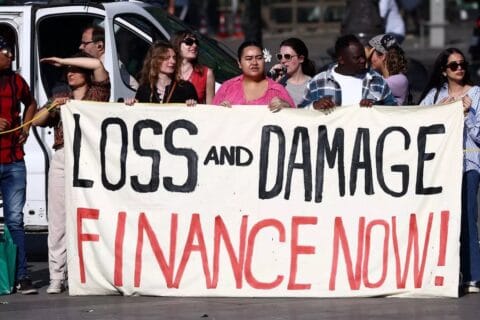
As a jumping-off point, take the breakthrough Loss and Damage Fund (LDF) for vulnerable countries, first announced at COP27, then formally agreed at COP28. It is still early doors and doubts persist, but the fund aims to address and help remedy the impacts on communities most affected by climate change — and to do so by way of financial support. Costing Loss and Damage constitutes a first step towards reparations.
The concept and principles of reparations, as defined by the United Nations, are already finding expression amongst NGOs and civil society activists with respect to historical social and cultural injustices such as slavery, as well as conflict-related causes, as in the case of post-WW2 payments.
Early examples of organisations that have agreed reparations include the insurance market Lloyds of London, as well as the pub chain and brewery Greene King.
So, an initial to-think and to-do list for leaders, companies and organisations tackling SUSTICE is:
- Embrace the concept of Loss and Damage in terms of your operations, current and historical;
- Quantify the negative impacts of your activities; and cost (where possible) remedial action;
- Also, identify non-monetary forms of reparation; and assign value, where applicable;
- Review and revise your estimates for remedy and reparation in terms of sustainability linkages made across the full spectrum of your environmental, social and economic impacts;
- Establish a programme of reparations, whether through charitable giving, or direct engagement;
- Create a formal and credible SUSTICE strategy that you can communicate with trust and transparency.
Sustainability in action, not just intention
Nowadays, forward-looking organisations are expected to do more good, not just less harm.
In principle, therefore, it is important to recognise that any reparations should go beyond the idea of mere compensatory redress, or a guilt-washing fix. True SUSTICE calls for positive investment in environmental restoration and social wellbeing, as a means of enabling economic equity, not just prosperity.
It extends to supply chain impacts — whether that means Scope 3 emissions, or sweatshop labour.
It also reaches out community-wide — whether tackling environmental racism, or delivering social value.
And, crucially, its worth will be found in action, not just intention — success is all in the delivery.
SUSTICE might be an ugly word, but it is a beautiful idea.
SUSTICE = Sustainability + Justice.
* The article above is an updated and augmented version of a piece first published on SustMeme in Feb 2023.
Further Reading:
- More on the COP27 announcement of a Loss and Damage Fund; and its formal agreement at COP28;
- More updates on the official website for the Fund for responding to Loss and Damage (FRLD);
- More from the UN on the Basic Principles and Guidelines on the Right to Remedy and Restoration;
- Also on SustMeme, Five deep changes needed for a safer world;
- Also on SustMeme, Will the Loss and Damage Fund be fit for purpose?
- Also on SustMeme, Where does green go under Trump 2.0?
- Also on SustMeme, Human rights risks in world battery supply chain;
- Also on SustMeme, Toolkit for investors on Indigenous rights respect;
- Also on SustMeme, Climate anxiety, wellbeing and business risk;
- Also on SustMeme, Biodiversity risk not on the business radar;
- Also on SustMeme, Investors name and shame on human rights.
SUSTMEME: Get the Susty Story Straight!