Survey shows the influence of sustainability is stabilising as a driver of consumer choice, with fewer industries seeing decline, which begs the question: Is it the beginning of the end for the ESG backlash?
Marking a turnaround in the last twelve months, sustainability is seeing its influence stabilise globally in 2026, according to the latest iteration of the Sustainability Perceptions Index, published by Brand Finance.
Of the 48 sectors analysed by the world’s leading brand valuation consultancy, only half (24) recorded a drop-off this time around, compared to more than three-quarters (38) in the previous cycle.
A relative uptick in sentiment begs the question: Is this the beginning of the end for the ESG backlash?
There is a new trend emerging, says Robert Haigh, Strategy & Sustainability Director at Brand Finance:
“Although there has been a continued decline in the role of sustainability in 2026, this is less pronounced than in 2025, suggesting limits to the so-called ‘ESG backlash’ and perhaps a shift towards more focused and credible sustainability engagement on the part of brands.”
Perception vs Performance
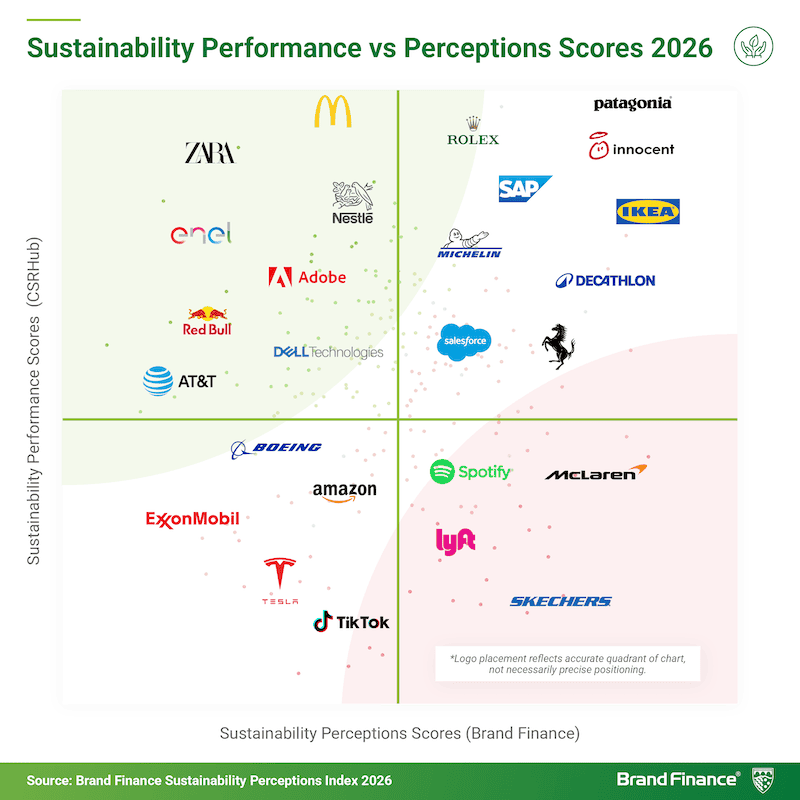
In truth, at the level of the individual brands scored year-on-year, both fortunes and signals are mixed.
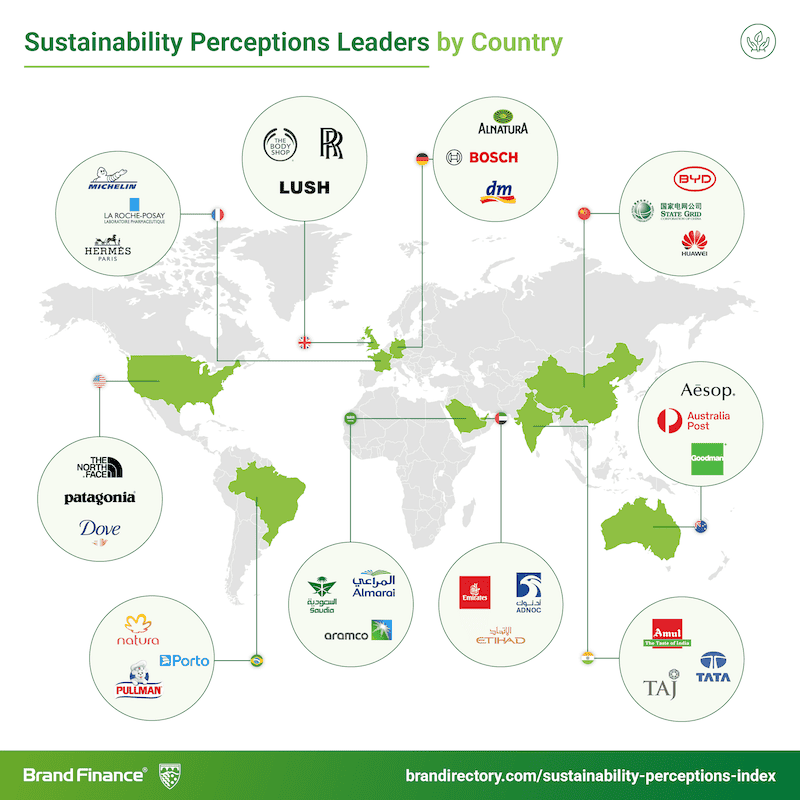
On the upside, Patagonia, Lush, Alnatura, Michelin, and Tata Group are among regional leaders for sustainability perceptions. Topping all brands, Google has officially overtaken Apple and scores highest for Sustainability Perceptions Value, reaching an estimated worth of $41.9 billion.
Whilst Google has the highest proportion of brand value tied to its perceived commitment to sustainability, this does not necessarily reflect sustainability performance, nor does it imply exceptional commitment.
As a measure of influence, sustainability is in the eye of the consumer — it is all a matter of perception. The ranking reflects the fact that the preponderance of consumers around the world believe Google is taking suitable action to minimise its negative impacts and invest in positive planet and community initiatives.
When it comes to brands that could do even better, Apple has the most to gain from communicating more overtly about sustainability — with its Sustainability Gap Value now up to $2.6 billion. This Gap Value represents the difference between perceived sustainability and actual sustainability performance.
A positive value indicates brand sustainability performance is better than perceptions suggest. This implies Apple could potentially generate even more value from proactive communication about its initiatives.
Reputation on the slide
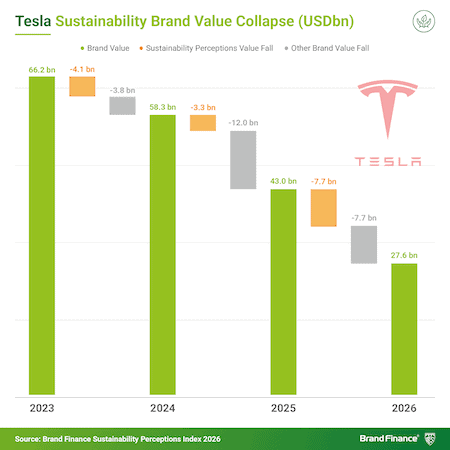
Leading the race to the bottom, Tesla sees its green reputation continue to slide for a third year running, losing a whopping $7.7 billion in sustainability-related brand value.
From 2024 to 2026, perceptions of Tesla’s environmental commitment declined in almost all markets tracked by Brand Finance, with most recording double-digit percentage drops over the three-year period.
The largest declines occurred in the UK, Denmark, US, Norway, France, Canada, Netherlands, and Germany.
EV leadership alone is no longer enough to protect the Tesla brand, comments Robert Haigh:
“Tesla has undoubtedly played a major role in accelerating global EV adoption. However, its sustainability scores lag the sector average due to governance and labour concerns, and continued controversies surrounding Elon Musk.
“The decline extends beyond the environmental dimension, with Tesla’s social and governance scores falling just as much. This deterioration has had a significant financial impact: Tesla’s brand value fell from USD66.2bn in 2023 to USD27.6bn in early 2026, while sustainability-linked value dropped from USD17.8bn to USD2.7bn.”
Regional leaders light the way
Region-by-region, the report names-and-fames the market leaders mot positively regarded. In the US, apparel brands Patagonia and The North Face lead with the highest sustainability perceptions scores.
In the UK, The Body Shop and LUSH achieve the highest sustainability perceptions, while Rolls-Royce is well perceived on governance. In Germany, health food grocer Alnatura leads on environmental and social sustainability perceptions; dm leads on governance. In France, Michelin and La Roche-Posay lead in both environmental and social sustainability; luxury atelier Hermès leads on governance.
In India, Tata Group, Taj, and Amul rank among the best-perceived brands for sustainability, reflecting the country’s strong tradition of corporate social responsibility. In China, BYD and State Grid excel on environmental sustainability, while Huawei scores highly on governance. Goodman and Aesop stand out for environmental sustainability perceptions in Australia, while Australia Post does well for governance.
Survey data backed by ESG ratings
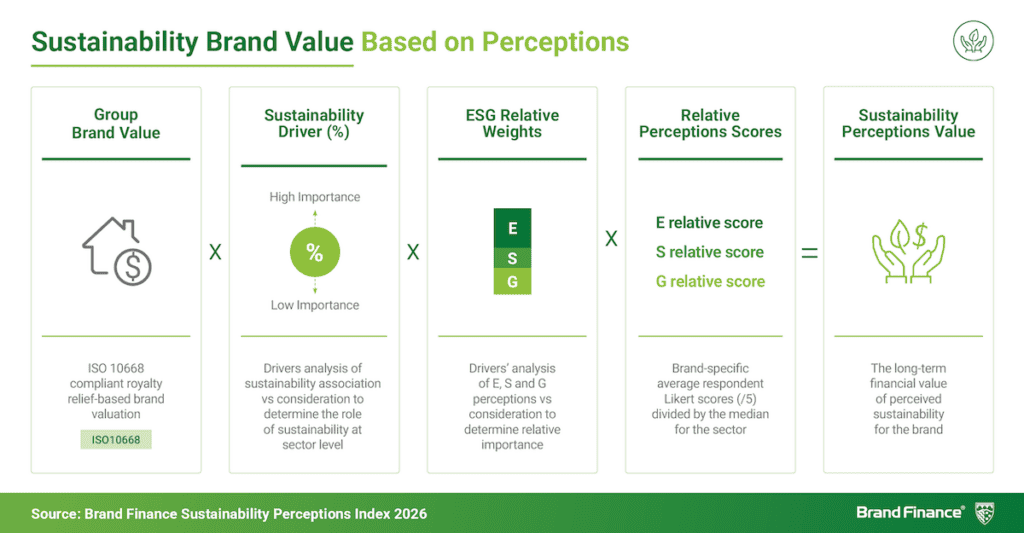
The Brand Finance Sustainability Perceptions Index 2026 is based on research undertaken with over 175,000 respondents across 41 countries. To calculate figures for Sustainability Perceptions Value and Gap Value, Brand Finance combines its own survey data with ESG performance ratings from CSRHub.
Headquartered in London, Brand Finance is the world’s leading brand valuation consultancy and operates in over 25 countries. Every year, Brand Finance conducts more than 6,000 brand valuations, supported by original market research, and publishes over 100 reports ranking brands across all sectors and countries.
Further Reading:
- More about Brand Finance; and its Sustainability Perceptions Index 2026;
- More about the provider of consensus ESG performance ratings, CSRHub;
- Also on SustMeme, Authenticity: Are you green with envy, or suspicion?
- Also on SustMeme, Greenwashing and biodiversity risks now double;
- Also on SustMeme, Sustainability report gets voiced in Gen-Z fashion;
- Also on SustMeme, Why credibility will define sustainable brand growth;
- Also on SustMeme, Beyond the Label: Transparency not just taglines;
- Also on SustMeme, Rise in ESG risks linked to greenwashing;
- Also on SustMeme, Fairtrade shea campaign targets beauty brands;
- Also on SustMeme, Is greenwash the new goldrush for litigation?
Check out the full archive of stories on the SustMeme Business & Finance Channel, now available to Sponsor.