In this SustMeme Guest Post, Jane Marsh, Editor-in-Chief at Environment.co, explains why organisations should not ignore the effects of rising nighttime heat on employee performance, health and wellbeing.
JM: Rising temperatures are placing new and different demands on climate control systems — and this is happening not just all around the world, but importantly around the clock, too.
The heat extends beyond daylight hours and lingers overnight, which disrupts recovery cycles. As a consequence, the majority of homeowners and organisations alike now face challenges in maintaining consistent indoor conditions as nighttime heat reduces opportunities for passive cooling.
This trend is becoming a significant public health concern, particularly for those responsible for indoor environments and occupant wellbeing — which means the do-nothing option is no longer viable. Proactive climate control strategies are therefore essential to mitigate risk and maintain operational stability.
Causes and consequences
The greenhouse effect traps heat near Earth’s surface and prevents it from dissipating after sunset, which drives nighttime temperatures higher. In urban environments, materials like concrete and steel absorb heat during the day and slowly release it overnight, which extends periods of elevated temperatures.
This hot-in-the-city phenomenon has become known as the urban heat island effect.
To make matters worse, climate change is fuelling the fire — it further amplifies temperature patterns by increasing the duration of heatwaves, particularly in densely built-up areas. In turn, heatwaves place greater strain on climate control systems and reduce their ability to maintain stable, comfortable conditions.
These combined factors contribute to sustained indoor heat exposure in commercial and industrial settings.
Business and health impacts
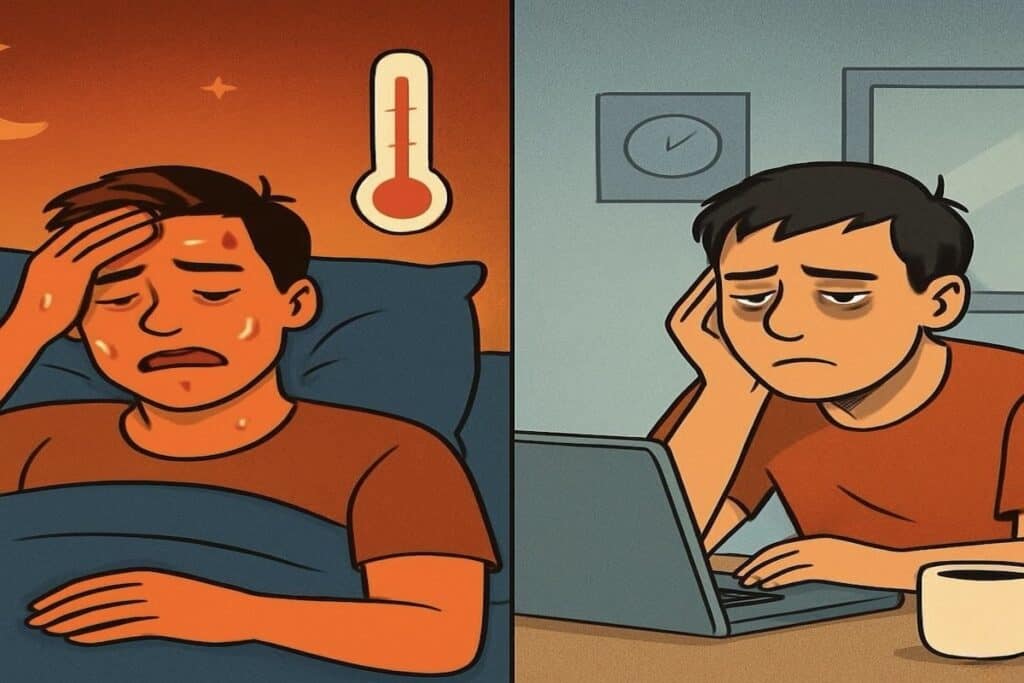
None of this is good news for health and wellbeing. Elevated nighttime temperatures interfere with the body’s natural ability to cool down — a critical step for initiating sleep and maintaining stable rest cycles.
Extended periods of high daytime and nighttime temperatures also create cumulative stress on the body, increasing the risk of heat-related illness and long-term health complications. Poor sleep quality further impairs cognitive function and reduces overall productivity in professional settings.
These effects can translate into operational risks, including higher workplace accident rates and rising healthcare costs for organisations. Knock-on effects can impact on mood and morale, too. Persistent fatigue can lower employee engagement and increase turnover in high-demand industries.
Taken together, all of these issues raise liability concerns, as organisations that fail to address these risks may also face compliance challenges related to workplace safety and employee wellbeing standards.
The good news is there is plenty that responsible actors can do; but they need to act early and fast.
Indoor climate control
Right-sizing is a good place to start. For instance, selecting the correct size of AC unit can help maximise efficiency by reducing energy waste and lowering long-term operational costs.
To better manage and mitigate climate risk, organisations can also adopt dynamic temperature controls and smart building systems that respond to real-time environmental conditions and occupancy patterns.
To get ahead of the heat curve, the likes of pre-cooling, improved insulation and predictive analytics further help stabilise indoor temperatures and reduce strain during prolonged heat periods.
It is also vital to have good visibility and up-to-date information. So, as energy sustainability goals and indoor comfort expectations continue to rise, intelligent and data-centred HVAC management solutions have become essential for maintaining performance and efficiency, with a growing role to be played by AI.
Cool win-win for all
Ultimately, rising nighttime temperatures create hidden risks that go way beyond just comfort. They put pressures on climate control systems and manifest as impacts on public health and business performance.
So, organisations that proactively support sleep and recovery via smart climate control strategies can both significantly reduce risk and strengthen long-term resilience — which is a truly cool win-win for everyone.

Jane Marsh is Editor-in-Chief of Environment.co, where she leads the publication’s mission to make sustainability accessible and actionable for readers worldwide. With a background in environmental journalism and communications, Jane has spent her career exploring the intersection of technology, policy, and sustainable living. Jane is passionate about advancing awareness around clean energy transitions, circular economy practices, and the future of green infrastructure. Under her editorial direction, Environment.co continues to highlight the people and tech driving a more sustainable planet.
Further Reading:
- More about features and news on Environment.co;
- Also on SustMeme, Urban regeneration designed for climate resilience;
- Also on SustMeme, UK & Irish homes are coolest in Europe;
- Also on SustMeme, Building for climate resilience – from cold snap, to heatwave (2018);
- Also on SustMeme (by Jane Marsh), Bats in the city: Why urban areas become havens;
- Also on SustMeme (by Jane Marsh), Does outsourcing add up for construction waste?
- Also on SustMeme (by Jane Marsh), Microgrids fuel guilt-free holiday-season resilience;
- Also on SustMeme (by Jane Marsh), Pharmaceutical pollution: Medications in our water;
- Also on SustMeme (by Jane Marsh), Why is it still so hard to recycle rare earth metals?
You can check out the full archive of past Guest Blog posts here.
Would you like to Guest Blog for SustMeme? For more info, click here.
SUSTMEME: Get the Susty Story Straight!