New Writing: As the UK government commits to yet another mid-century climate goal, Jim McClelland explains why the smart money will play a waiting game with the 7th Carbon Budget.
Forget Wimbledon and the World Cup. Ignore the SpaceX IPO. The big news this month sees the UK Government commit to a headline figure for the 7th Carbon Budget (CB7).
OK, it might not justify the hype, but CB7 is actually a big deal; or at least it should be.
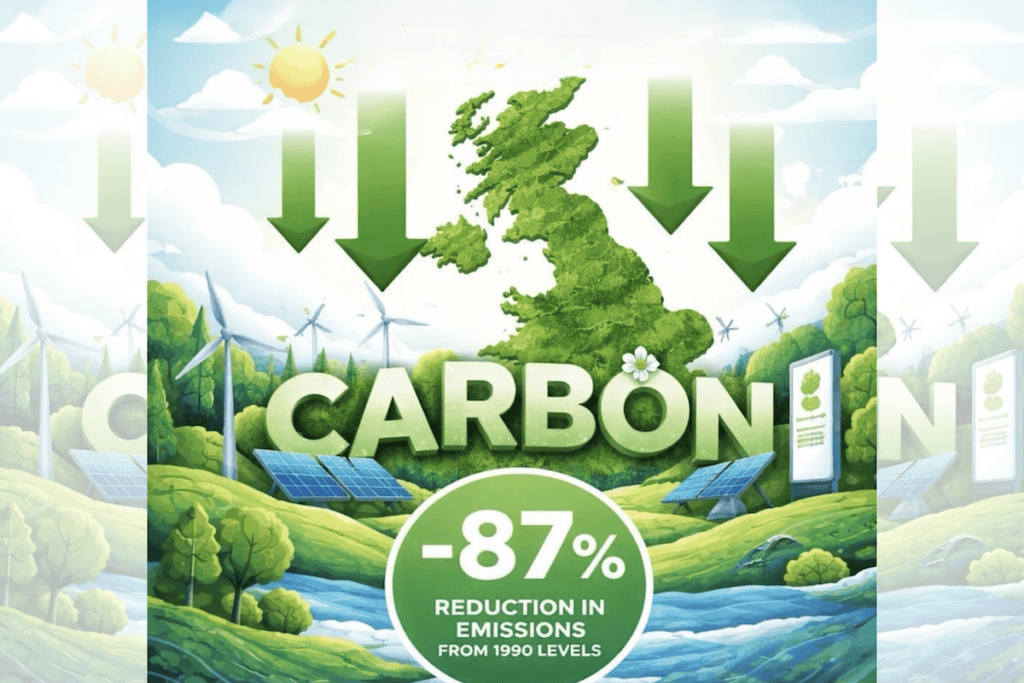
Set 12 years in advance, CB7 imposes a legally binding five-year budget cap for the period 2038-2042. It endorses a science-led target for reduction in greenhouse gas emissions, compared to 1990 levels.
This top-line number is huge: 87%.
So, why is it not high-fives all round in the eco-lobby of the UK climate community?
Confidence and consistency
Well, putting aside geopolitical scepticism and target fatigue, there are some nagging inconsistencies and uncertainties that fuel fears and doubts about delivery.
For instance, the original advice from the Climate Change Committee (CCC) back in February included numerous specific goals as part of its Balanced Pathway approach.
One of these targets talked about half of all homes in the UK having a heat pump by 2040.
Given that the proportion of UK homes with a heat pump in 2023 was as low as 1%, these proposals seemed reassuringly ambitious, coming from an independent statutory body.
Fast-forward to flaming June — when the Department for Energy and Net Zero (DESNZ) formally confirms its proposed level for CB7 — and some of the detail has disappeared from view.
The official press statement from DESNZ makes no mention of heat pumps.
Context, constraints an cuts
Maybe this should not come as a complete surprise.
The Government response in March to CCC recommendations did flag the fact that heat pump installation rates lag way behind the trajectory necessary to reach the lofty aspirations set out the month before.
The follow-on report by the Environmental Audit Committee referenced uptake constrained by upfront costs, also policy uncertainty (ironically), and issues of consumer perception.
It did also point to the need for a rapid expansion in numbers of trained installers — which could of course be seen as an opportunity for the industry, rather than a risk.
Pouring more cold water on heat pump hopes, though, official deployment statistics for Q1, published 11 June, show a drop of 18% for units up to 45kW.
Add a splash of rumour regarding the PM seeking cuts to DESNZ budgets to help fund government defence plans and the mood music around CB7 soon gets gloomy.
Job and wealth creation
So, is it all just a case of mañana metrics on the net-zero never-never? Well, no… not yet.
Also published in week-one June, heavyweight new analysis from the Energy and Climate Intelligence Unit (ECUI) and the Confederation of British Industry (CBI) calculated the worth of the UK net zero economy to be around £105 billion in Gross Value Added (GVA).
This fast-growing green goldmine now supports some 1.1 million full-time equivalent jobs, across energy, manufacturing, construction, engineering and professional services. Green jobs are also good jobs – with wages around 11% higher than the national average.
And, as ever, money makes money, even in sustainability.
So, for every £1 of economic value created directly by net zero firms, a further £1.85 gets generated across the wider UK. This multiplier effect is manifest not only in supply chains, but household spending too.
Other indicators invite positive interpretation, as well.
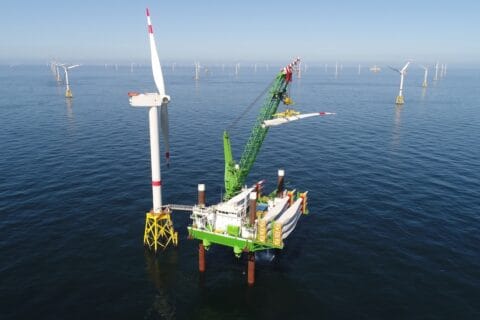
Perhaps spurred on by a desire to reduce fossil-fuel dependency exposed by closure of the Strait of Hormuz, the Crown Estate is to re-tender a 1.5GW offshore wind farm project abandoned in the Irish Sea.
Like all good stories though, there may be a plot twist or two still to come in the tale of the UK Carbon Budget – with the latest episode soon to drop in the unfolding Starmer Drama.
From Makerfield to Westminster
For UK politicos, one last date looms large in the diary this month: Thursday 12 June.
This is when a humble by-election takes place in a little-known constituency in NW England: Makerfield. Standing as Labour Party candidate there is one Andy Burnham, the current Mayor of Greater Manchester.
If Burnham becomes a Member of Parliament, he is expected to challenge incumbent Prime Minister Sir Keir Starmer for the party leadership. If he wins that too, some suggest Burnham will call a snap General Election, in a bid to overhaul the manifesto mandate.
First elected Mayor of Greater Manchester in 2017, Burnham has a progressive track record on climate targets and carbon budgets. Advised by the renowned Tyndall Centre for Climate Research, he introduced a target for the city region to become carbon neutral by 2038, 12 years ahead of the national deadline.
As yet, any prospect of ‘Prime Minister Burnham’ impacting UK climate policy remains at least two, maybe even three, tough elections away; but it is a possibility, a credible one.
So, whatever your hopes and fears for CB7, it is worth waiting and watching – firstly, while votes get cast and counted at the ballot box in Makerfield; then, maybe in Westminster too.
To read more, check out the fuller-length version of this article, free to access and view on The Hub:
Make or break for Carbon Budget.
To view a back-catalogue of articles authored by Jim McClelland for ‘The Hub’, please see archive here.
SUSTMEME: Get the Susty Story Straight!