Rice husks are one of agriculture’s most abundant byproducts and a biochar innovator has found a practical way to turn that material into value for farmers and the climate, avoiding disposal in open burning.
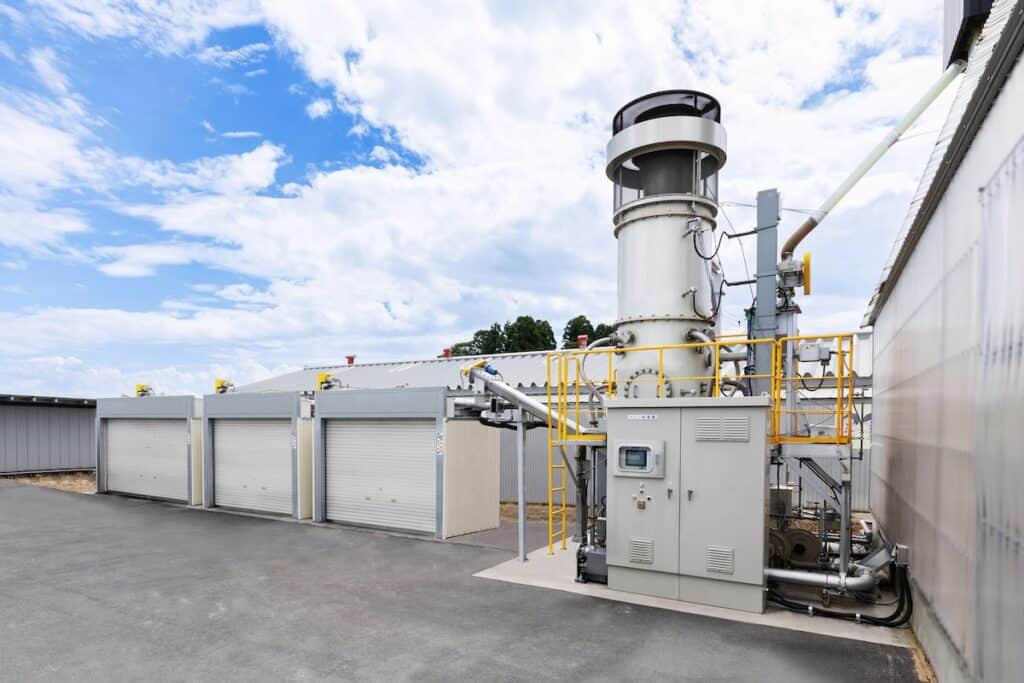
Yanmar Energy System Co began taking orders in Japan in September 2026 for a system that converts rice husks into biochar. It is designed for grain storage and rice-processing centres that manage large volumes.
Drawing on data in materials submitted under NEDO’s Green Innovation Fund Projects, Yanmar has estimated that Japan’s rice sector alone generates an estimated two million metric tons of husks each year.
By returning the resulting biochar to farmland, operators can improve the condition of the soil while storing carbon in a stable form that resists decomposition. This solution generates climate-smart value from waste.
The approach connects waste management, soil health and decarbonisation in a circular agricultural model.
Carcinogens and fine particulate matter
Globally, rice husk disposal is a persistent challenge. Open burning is increasingly restricted or discouraged, while smoke, odours, fine particulate matter and the possible formation of carcinogenic crystalline silica under poorly controlled combustion conditions can create environmental and health concerns.
Rice-producing regions around the world therefore face the same fundamental question: How can a low-value residue be managed without simply shifting the burden elsewhere?
Biochar offers one pathway by converting the husks into a material that can be used rather than discarded.
Electric efficiency in 24hr operation
Yanmar commercialised the system after demonstration testing that began in 2023. Its proprietary high-temperature carbonisation method is designed to suppress smoke, odours and the formation of crystalline silica while producing porous biochar with a larger surface area than lower-temperature rice husk charcoal.
The system uses a 3.2kW electric heater for about 1.5 hours to ignite the process. Following ignition, heat from the rice husks sustains carbonisation without fossil fuel or a secondary-combustion burner.
All of this means average power demand over 24 hours is only approximately 1.5kW. In addition, automation and remote monitoring support continuous operation, including the capacity to work overnight.
From biochar to healthier soils
The system has a rated rice husk input of 100kg per hour, producing approximately 25kg of biochar on a zero-moisture basis. It can operate continuously for up to 100 hours at a time.
The resulting porous biochar can adsorb fertiliser and other substances. It may help improve water retention and drainage when applied to farmland, too.
Because the carbon in biochar is resistant to decomposition, incorporating it into soils can also support long-term carbon storage and contribute to carbon-negative outcomes.
Japanese solution to global problem
At present, the rice husk biochar system is a Japan-focused product, but the problem it addresses is global.
Rather than treating crop residues only as waste, the system creates a cycle in which a byproduct of food production returns to the land as a useful material. In this way, Yanmar uses circular innovation technology to support more productive and sustainable relationships among energy, food and the environment.
Founded in 1912, Yanmar is a global innovator in a range of industrial equipment: from engines, agricultural machinery and facilities, construction equipment, energy systems, plus marine, to machine tools and components. It is guided by its Brand Statement: A Sustainable Future – New Value Through Technology.
Further Reading:
- More about Yanmar Energy System Co. Ltd; part of the Yanmar Holdings group;
- More about the New Energy and Industrial technology Development Organization of Japan (NEDO);
- More about NEDO’s Green Innovation Fund Projects;
- Also on SustMeme, Millions for AI to give farmers a voice in the field;
- Also on SustMeme, Soil science: Can biotech learn from infrastructure?
- Also on SustMeme, Rethinking agri-waste for a circular food economy;
- Also on SustMeme, Investors in autonomous vehicles bet the farm;
- Also on SustMeme, Data at heart of collaboration on climate change (in AFOLU);
- Also on SustMeme, From farming and energy, to future cities (2015);
- Also on SustMeme, Sustainable farming futures: Fields of hope (2013).
Check out the full library of stories on the new SustMeme Food & Agriculture Channel, now available to Sponsor.