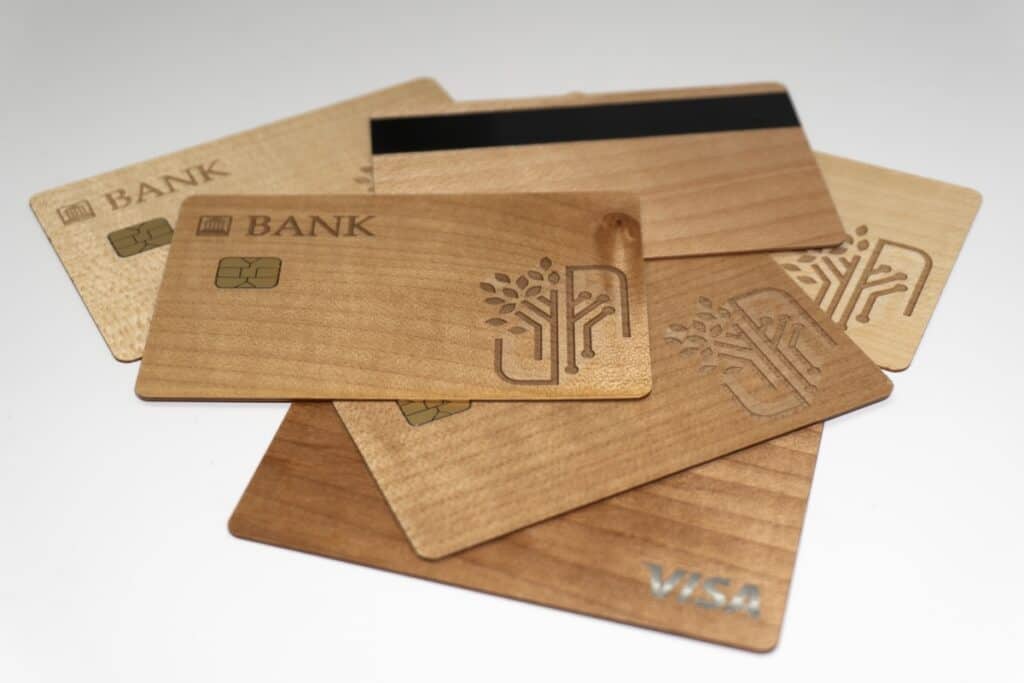
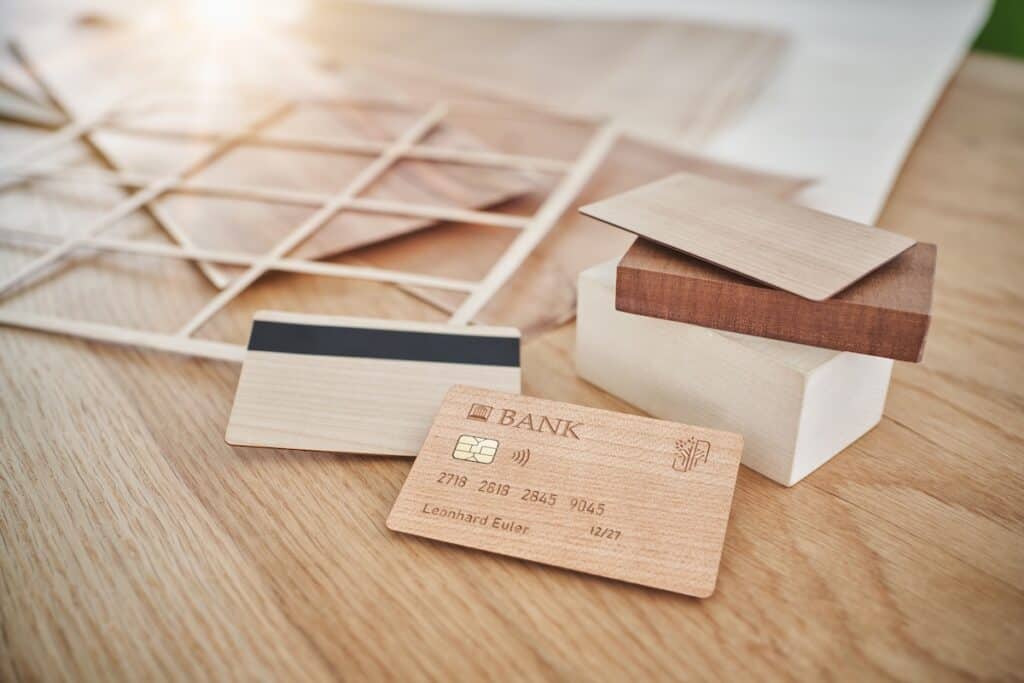
Forget putting it on the plastic, what today’s conscious consumer wants from a premium banking experience is the look and feel of a wooden card, earning them credit on account of its sustainability.
As banks compete for customers, new research from Copecto suggests sustainability and physical products are becoming increasingly important in premium banking.
The company’s Premium with Purpose report found nearly two-thirds of UK consumers (63%) believe banks should do more to make products and services sustainable.
More than two out of three consumers (68%) are interested in wooden payment cards in particular, with half of these (a third of all consumers surveyed) saying they would consider switching banks to obtain one.
Nearly half of those interested in wooden payment cards (48%) would also upgrade to a premium bank account if it included a wooden payment card, with this figure rising to 67% among the highest earners.
Switch for sake of sustainability
The main takeaway from the research is that consumers increasingly appear to view sustainability as an integral part of the premium banking experience, rather than seeing it as a standalone environmental issue.
So, by using the likes of payment cards made from 100% FSC-certified wood, banks can better align with changing consumer expectations while supporting more credible sustainability positioning.
With branding under scrutiny around sustainability, materials matter, says CEO of Copecto Ashwini Pandey:
“Banking is evolving. Consumers increasingly expect sustainability to be visible within the products and experiences they interact with every day. But they are also becoming more sceptical of broad environmental claims, with nearly seven in ten respondents (69%) suspecting brands may use sustainability to greenwash.
“For years, metal cards have been treated as the default symbol of premium banking, but consumers now want products that reflect quality, sustainability, and modern expectations as well. With more than two-thirds of respondents expressing interest in wooden cards, banks have a real opportunity to stand out and attract high-value customers.”
Wood winner with high earners

Importantly, survey results reveal the strongest interest in wooden cards comes from affluent consumers – the very same audiences banks currently compete hardest to attract through premium products.
Interest in wooden payment cards rises to between 72% and 76% among consumers earning between £40,000 and £150,000 annually. Consumers earning over £150,000 demonstrated some of the strongest preference for wood once they understood more about alternative card materials.
Nonetheless, awareness remains a major barrier to adoption. Before taking part in the survey, more than half the respondents (56%) were unaware payment cards could be made from materials other than plastic.
However, once consumers better understood alternative card materials and realised they could offer comparable durability and functionality to traditional cards, preference for wood increased significantly.
Ultimately wood proved the preferred payment card material overall.
Branding and physical touchpoints
Despite the rise of digital wallets and app-led banking, the research suggests physical payment cards still play an important role in how consumers perceive and experience banking brands.
The consumer survey found that:
- 71% believe wood is better for environmental impact than metal;
- 63% of consumers perceive wooden products as more exclusive;
- 63% say the ability to ‘stand out’ matters to them; and
- 54% would consider using a wooden card to express support for sustainability.
In short, consumers want sustainability they can literally see and feel, concludes Ashwini:
“Physical payment cards still play an important role in how consumers view their bank. As banking becomes increasingly digital, the physical touchpoints that remain have greater value in helping brands stand out and create stronger customer experiences. Consumers want tangible proof of sustainability, not just environmental messaging.”
Based in Wiesbaden, Germany, Copecto GmbH is a subsidiary of DG Nexolution eG seeking to revolutionise the cards industry by offering a reliable and environmentally conscious alternative – the TIMBERCARD. In partnership with Swiss Wood Solutions AG, Copecto holds the global licence for production and distribution.
Further Reading:
- More about Copecto GmbH; and its Premium with Purpose report available to download in full;
- More about wood-based frontier technology from Swiss Wood Solutions AG;
- Also on SustMeme, Funders back cellulose roll-out at industrial scale;
- Also on SustMeme, Greenwashing and biodiversity risks now double;
- Also on SustMeme, Wood-based water tech removes 80% dye pollutants;
- Also on SustMeme, Are big banks still secretly in love with fossil fuels?
Check out the full archive of stories on the SustMeme Business & Finance Channel, now available to Sponsor.