
Report into cost-competitiveness confirms clean power is now the cheaper option for 91% of renewable energy projects, beating fossil fuels on price, but also warns grid-integration and financing issues remain.
Published by the International Renewable Energy Agency (IRENA), analysis of Renewable Power Generation Costs in 2024 reveals that renewables maintained their price advantage over fossil fuels last year. Cost declines were driven by technological innovation, competitive supply chains, and economies of scale.
Furthermore, the cost differential was often substantial — renewables were cheaper by some distance.
Often roughly half the price
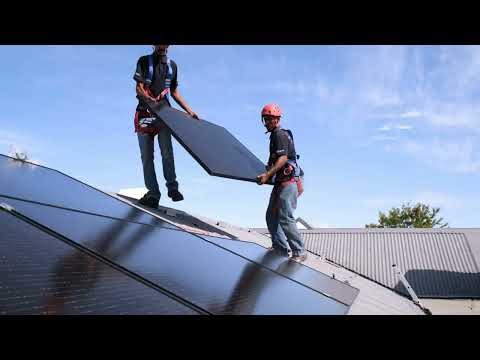
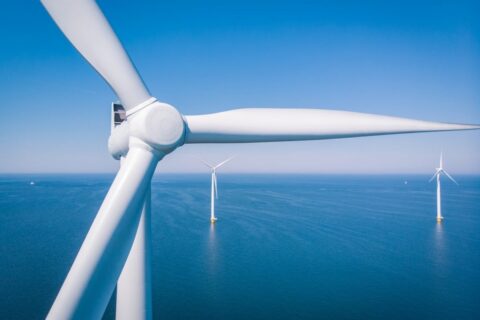
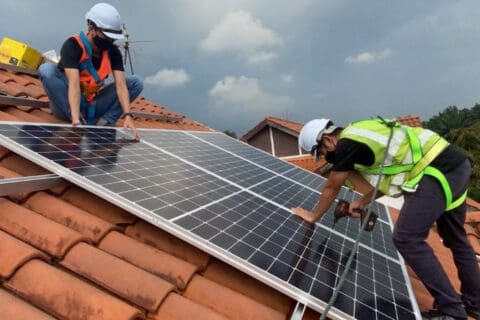
In 2024, solar photovoltaics (PV) were, on average, 41% cheaper than the lowest-cost fossil fuel alternatives, while onshore wind projects were 53% cheaper. Onshore wind remained the most affordable source of new renewable electricity at $0.034/kWh, followed by solar PV at $0.043/kWh.
The addition of 582 gigawatts of renewable capacity in 2024 led to significant cost savings, overall. In total, it avoided fossil-fuel use valued at about $57bn. Tellingly, the report calculates that 91% of new renewable power projects commissioned last year were more cost-effective than any new fossil fuel alternatives.
As well as being cost-competitive versus fossil fuels, renewables also improve energy security by helping to limit dependence on international fuel markets. The business case for renewables looks stronger than ever.
Short-term challenges remain
It is not all good news, however.
While continued cost reductions are expected as technologies mature and supply chains strengthen, short-term challenges remain. Geopolitical shifts including trade tariffs, raw material bottlenecks, and evolving manufacturing dynamics, particularly in China, pose risks that could temporarily raise costs.
In particular, higher costs are likely to persist in Europe and North America, driven by structural challenges such as permitting delays, limited grid capacity, and higher balance-of-system expenses.
By contrast, regions like Asia, Africa, and South America, with stronger learning rates and high renewable potential, could see pronounced cost declines. In effect, forecasts reveal something of a North-South divide.
Leadership has a key role to play in renewables, says United Nations Secretary-General António Guterres:
“Clean energy is smart economics – and the world is following the money. Renewables are rising, the fossil fuel age is crumbling, but leaders must unblock barriers, build confidence, and unleash finance and investment. Renewables are lighting the way to a world of affordable, abundant, and secure power for all.”
Clean power is winning on cost, but challenges remain, adds IRENA Director-General Francesco La Camera:
“The cost-competitiveness of renewables is today’s reality. Looking at all renewables currently in operation, avoided fossil fuel costs in 2024 reached up to $467bn. New renewable power outcompetes fossil fuels on cost, offering a clear path to affordable, secure, and sustainable energy.
“This achievement is the result of years of innovation, policy direction, and growing markets. However, this progress is not guaranteed. Rising geopolitical tensions, trade tariffs, and material supply constraints threaten to slow the momentum and drive-up costs.
“To safeguard the gains of the energy transition, we must reinforce international cooperation, secure open and resilient supply chains, and create stable policy and investment frameworks — especially in the Global South. The transition to renewables is irreversible, but its pace and fairness depend on the choices we make today.”
Structural drivers and market conditions
Offering a more strategic perspective on future prospects, the 2024 report from IRENA also explores the structural cost drivers and market conditions shaping renewable investment. It concludes that stable and predictable revenue frameworks are essential to reduce investment risk and attract capital.
Mitigating financing risk is central to scaling renewables in both mature and emerging markets. Instruments such as power purchase agreements (PPAs) play a pivotal role in accessing affordable finance, while inconsistent policy environments and opaque procurement processes undermine investor confidence.
Specifically, integration costs are emerging as a new constraint on deployment of renewables.
Increasingly, wind and solar projects are delayed due to grid connection bottlenecks, slow permitting and costly local supply chains. This is acute in G20 and emerging markets, where grid investment must keep pace with rising electricity demand and the expansion of renewables.
Furthermore, financing costs remain a decisive factor in determining project viability. In many developing countries of the Global South, high capital costs, influenced by macroeconomic conditions and perceived investment risks, significantly inflate the Levelised Cost of Electricity (LCOE) for renewables.
For example, IRENA found that while onshore wind generation costs were similar in Europe and Africa with around $0.052/kWh in 2024, the cost structures varied significantly. European projects were capital-expenditure driven, while African projects bore a much higher share of financing costs. IRENA’s assumed cost of capital ranged from 3.8% in Europe to 12% in Africa, reflecting differing perceived risk profiles.
Tech helping drive down costs
Finally, technological advances beyond generation are also improving the economics of renewables.
The cost of battery energy storage systems (BESS) has declined by as much as 93% since 2010, reaching $192/kWh for utility-scale systems in 2024. This dramatic reduction is attributed to a number of key factors, including manufacturing scale-up, improved materials and optimised production techniques.
Battery storage solutions involving hybrid systems — combining solar, wind and BESS as well as digital technologies — are increasingly vital for integrating variable renewable energy.
With the rapid growth in deployment of artificial intelligence (AI) across all sectors of business and industry, including energy, AI-enabled digital tools are enhancing asset performance and grid responsiveness.
Yet, digital infrastructure, flexibility, grid expansion and modernisation remain pressing challenges — not least in emerging markets, where full potential of renewables cannot be realised without more investment.
International cooperation and partnerships
The International Renewable Energy Agency (IRENA) is the lead intergovernmental agency for the renewables-based energy transition in pursuit of a systemic change across the energy sectors.
A global energy agency comprised of 169 countries and the EU, with 14 additional countries in accession, IRENA provides knowledge, technical assistance and capacity building, project and investment facilitation.
The Agency enables international cooperation and partnerships to fight climate change and promote sustainable development, energy access, energy security and resilient economies and societies.
Further Reading:
- More about the International Renewable Energy Agency (IRENA), in general;
- Read/Download new report from IRENA Renewable Power Generation Costs in 2024;
- Also on SustMeme, Tipping point for business attitudes to renewables;
- Also on SustMeme, Investment in renewables falls short of 2030 goal;
- Also on SustMeme, Record, but inequitable, growth in renewables;
- Also on SustMeme, Energy transition to add 40 million jobs by 2050;
- Also on SustMeme, Energy transition investment hits $500 billion for first time;
- Also on SustMeme, Solar and wind now cheapest for 2 in 3 people worldwide;
- Also on SustMeme, Is the global energy transition starting to stall?
Check out the full archive of stories on the SustMeme Climate & Energy Channel, now available to Sponsor.