
In this SustMeme Guest Post, Ivan Asiimwe, Founder & CEO of EnerBot, reflects on what repeated exposure to underperforming solar and hybrid systems reveals about the real challenges in sustainable energy delivery.
IA: Lessons get learned in the field — and for over a decade, I have worked around energy systems in East Africa, from rural health facilities and agricultural sites to commercial and community-scale installations.
Many of these projects were designed with the right intentions: clean power, resilience, access, and long-term development impact. Yet, over time, a worrying pattern became impossible to ignore.
In many cases, the problem was not the absence of energy infrastructure. The problem was that existing systems were underperforming, poorly coordinated, or slowly failing without anyone noticing until too late.
This observation challenges a common assumption in the sustainability space: that progress is primarily achieved simply by deploying more renewable capacity. While generation is critical, how well such energy resources are managed, shared, and maintained, is often just as important as how much is installed.
Performance gap: Installation and impact
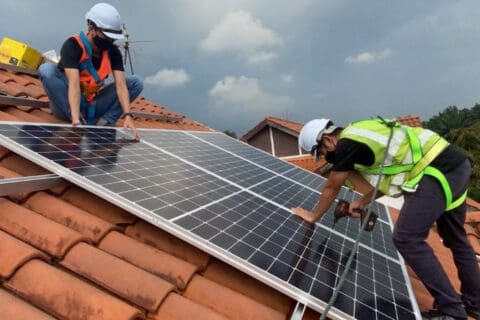
Sadly, there is ample evidence of unfulfilled expectations. Across the region, I encountered solar and hybrid systems that had once functioned well but were now operating far below their potential.
Batteries were degraded without replacement plans. Inverters were mismatched to loads. Systems had no monitoring, no service contracts, and no clear ownership for long-term performance.
In institutional settings such as clinics or schools, this translated into unreliable power for essential services. In commercial and agricultural contexts, it meant lost productivity and abandoned investments.
Ironically, many of these assets still had significant technical life left in them.
So, what struck me most was that these failures were rarely due to bad technology.
They were governance and coordination failures — fragmented responsibility, isolated decision-making, and a lack of mechanisms to optimise existing energy resources across users and time.
Sustainability means systems
The climate conversation often focuses on carbon metrics, megawatts installed, or capital deployed. Whilst these are important, they can obscure a quieter truth: Sustainability is fundamentally a systems challenge.
Energy assets do not exist in isolation. They sit within economic constraints, institutional behaviours, maintenance cultures, and demand patterns that shift over time.
Therefore, when systems are treated as one-off projects rather than living infrastructure, inefficiencies accumulate — and emissions reductions that looked good on paper quietly erode in practice.
In this sense, underutilised clean energy is itself a climate risk. Every diesel generator that restarts because a solar system failed prematurely represents not just a technical issue, but a missed opportunity.
Optimisation before expansion


One of the most valuable lessons I learned was the importance of optimising what already exists before building something new. In several cases, modest interventions — better load matching, shared use of surplus capacity, or basic performance monitoring — restored systems to meaningful levels of reliability.
This approach has implications beyond cost savings. Optimised systems reduce waste, extend asset lifetimes, and improve trust in clean energy solutions. They also lower the effective cost per tonne of emissions avoided, a metric increasingly relevant to both policymakers and investors.
Yet optimisation is rarely incentivised. Funding models favour new installations. There is often diffusion of responsibility for performance. Data on real-world system behaviour remains fragmented or inaccessible.
Connected energy thinking
These experiences reshaped how I think about energy transition pathways. Rather than viewing energy assets as static, site-bound projects, I began to see them as part of a broader, dynamic ecosystem — one where pooling, matching, and coordinating resources can unlock value that individual systems alone cannot.
This shift is not about replacing existing actors or technologies. It is about complementing them with improved information flows, clearer accountability, and mechanisms that allow energy to be used where and when it is needed most. It is about being better connected.
As climate finance tightens and scrutiny over impact grows, these questions only become more pressing.
New projects make headlines, but the next phase of the energy transition may depend less on how fast we install fresh capacity, and more on how we manage what we already have, intelligently and sustainably.
Lessons learned in the field
Ultimately, clean energy must be durable, inclusive, and integrated into the economic context it serves.
Most importantly, my experiences have taught me that clean energy succeeds best when communities, technicians, and institutions all understand and share responsibility for outcomes.
The energy transition is a team game; and we are in it together.

Ivan Asiimwe is an energy practitioner and entrepreneur based in Rwanda, East Africa. With experience spanning renewable energy systems, infrastructure optimisation, and sustainable business models, he is the Founder and CEO of project engineering, procurement, and construction company EnerBot. His work centres on improving real-world performance and resilience of clean energy assets across emerging markets. These insights will inform the upcoming launch of the EnerBot Energy Resource Pooling and Matching Initiative focused on improving utilisation and long-term performance of existing assets.
Further Reading:
- More about engineering, procurement, and construction company EnerBot;
- Also on SustMeme, Clean energy deal to power 1 in 10 homes in Spain;
- Also on SustMeme, Expedition maps tropical glacier loss in Uganda;
- Also on SustMeme, Nature-based solutions on the rise in Africa;
- Also on SustMeme, Record, but inequitable, growth in renewables;
- Also on SustMeme, Solar and wind now cheapest for 2 in 3 people worldwide;
- Also on SustMeme, Off-grid solar home-schooling in Kenya.
You can check out the full archive of past Guest Blog posts here.
Would you like to Guest Blog for SustMeme? For more info, click here.
SUSTMEME: Get the Susty Story Straight!