
In this SustMeme Guest Post, Monty Simus, Janne van Eerten, and Rosa Heuveling van Beek, from The Ocean Cleanup, discuss why failure in Geneva marks a turning point, not the end, for the Global Plastics Treaty.
>>>: The sixth and final round of negotiations for the Global Plastic Treaty ended without agreement.
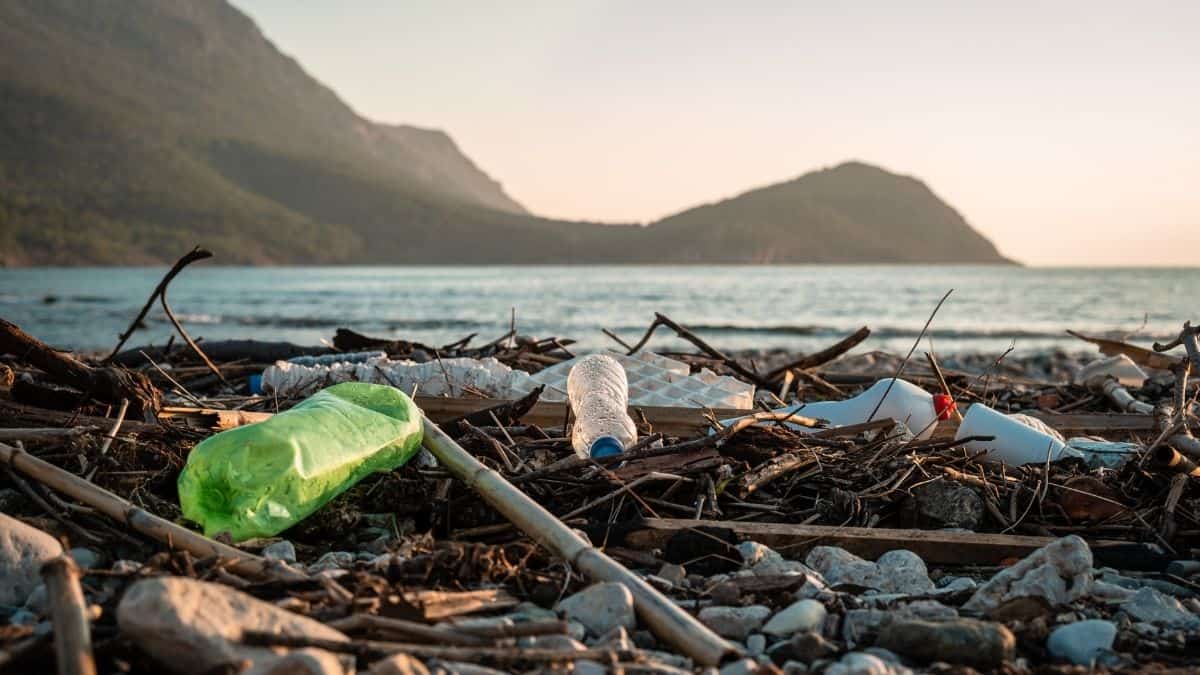
Despite a chorus of urgent calls from scientists, campaigners, and coastal communities, delegates left INC5.2 in Geneva without a binding commitment to halt the flow of plastic into our environment.
For many following this over the past years, it felt like a recurring heartbreak as the world’s most ambitious attempt to rein in runaway plastic pollution hit yet another political wall.
Yet, while the treaty may have stumbled, the global movement to tackle the plastic crisis has not lost momentum. Far from it. Across continents, cities, and communities, the fight continues, powered by the same urgency that made even the prospect of a treaty possible in the first place.
Governments, industry and communities
So, what now… ?
For governments, now is the time to align on upstream solutions, including:
- stronger regulations on single-use plastics;
- incentives for circular economy innovations; and
- the redesign of value chains to keep materials in use, and out of nature.
For industry, now is also the time to rethink packaging, logistics, and product lifecycles.
For communities, too, now is the time to adopt waste systems that work for their local realities.
Mosaic of actions, local and global

The lesson from Geneva is clear: progress on plastic will not come from one silver bullet, but from a mosaic of actions, local and global, upstream and downstream, public and private.
Even without a treaty, the tide of political will is still rising.
From the Philippines to the EU, the legislative train moves ever forward, with bans and levies.
Multinational brands are investing in reuse models.
Investors are recognising that the future of plastics is circular.
Together, a myriad of organisations are working to tackle the plastic flowing from rivers into seas, in increasing efforts to halt the damage it is causing to people and places, lives and livelihoods.
Focus on choke points to buy time

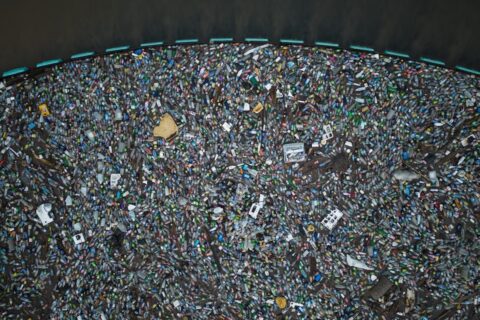
The Ocean Cleanup works at the intersection of science, engineering, and diplomacy as part of its mission to rid the world’s oceans of plastic. The approach is pragmatic: while the world debates upstream reforms and global agreements, barrier systems are being deployed across rivers globally to intercept plastic before it reaches the sea; whilst, in tandem, efforts continue to remove what has already accumulated in ocean gyres.
The 30 Cities Program, launched by the organisation at the United Nations Ocean Conference in Nice this year, is central to that mission. It identifies 30 key cities in Asia and the Americas to tackle at scale.
From Mumbai to Panama, these 30 cities are some of the most polluting river-adjacent urban hotspots on the planet, that together represent a significant share of the plastic leakage into the world’s oceans.
By focusing on these choke points, we can capture and remove plastic, millions of kilograms in total, from reaching marine ecosystems each year.
This is not a substitute for a global treaty, rather a holding pattern. We are buying the world time.
Paddle harder: Stay strong and pragmatic
It is easy to see the failure in Geneva as the end of a dream. We see it instead as a turning point.
The urgency remains, the technology exists, and the coalition of actors, from non-governmental organisations (NGOs) and governments to innovators and citizens, has never been stronger.
The ocean does not wait for politics, nor does it negotiate. It responds to what we do, or fail to do.
So, every kilogram of plastic we prevent from entering it is a victory — a victory not just for ecosystems, but for coastal economies, as well as for future generations.
The treaty will return to the global stage in another form, at another moment. When it does, it must be informed by proof-of-concept projects and scaled solutions now taking shape. That is why the work of The Ocean Cleanup, and many partners worldwide, is not just cleanup, it is groundwork.
Overall, the waves are still moving in the right direction.
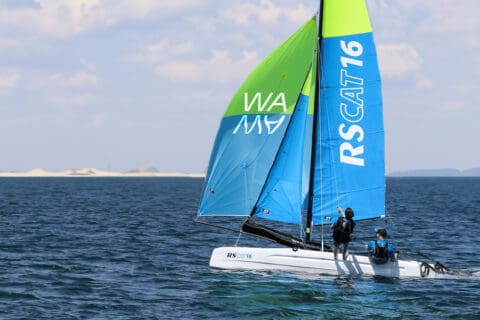
The question is whether we will paddle harder, or let the current carry us back.
At The Ocean Cleanup, we choose to paddle.

This blog has been co-authored by three members of the senior team at The Ocean Cleanup. Monty Simus (pictured) is Global Director of Public Affairs, Policy, and Blue Finance. A graduate of both Yale and Harvard, he has forged a career around impact investing, catalytic philanthropy, and innovative social finance — all with a focus on global water accessibility and resilient infrastructure. With a background in city projects and politics, Janne van Eerten is the Senior Manager for Global Public Affairs at the pioneering non-profit organisation. Rosa Heuveling van Beek is Global Public Affairs Associate there, and is also on the Secretariat of the Innovation Alliance for a Global Plastics Treaty.
Further Reading:
- More on the outputs from the Intergovernmental Negotiating Committee (INC) on Plastic Pollution;
- More on the pioneering work of The Ocean Cleanup; and its 30 Cities Program;
- Also on SustMeme, Opportunity to end plastic pollution wasted;
- Also on SustMeme, Milestone reached for cleanup of ocean plastic;
- Also on SustMeme, Solar watch made from upcycled ocean plastic;
- Also on SustMeme, Lost is found in fight to tackle ocean plastic;
- Also on SustMeme, Crowdsourcing waste clean-up on Mount Everest;
- Also on SustMeme, Trillion-$ packaging, to rockin’ megaprojects + ocean clean-up (2015).
You can check out the full archive of past Guest Blog posts here.
Would you like to Guest Blog for SustMeme? For more info, click here.
SUSTMEME: Get the Susty Story Straight!